Druse Quartz on Limonite
Posted April 30, 2019
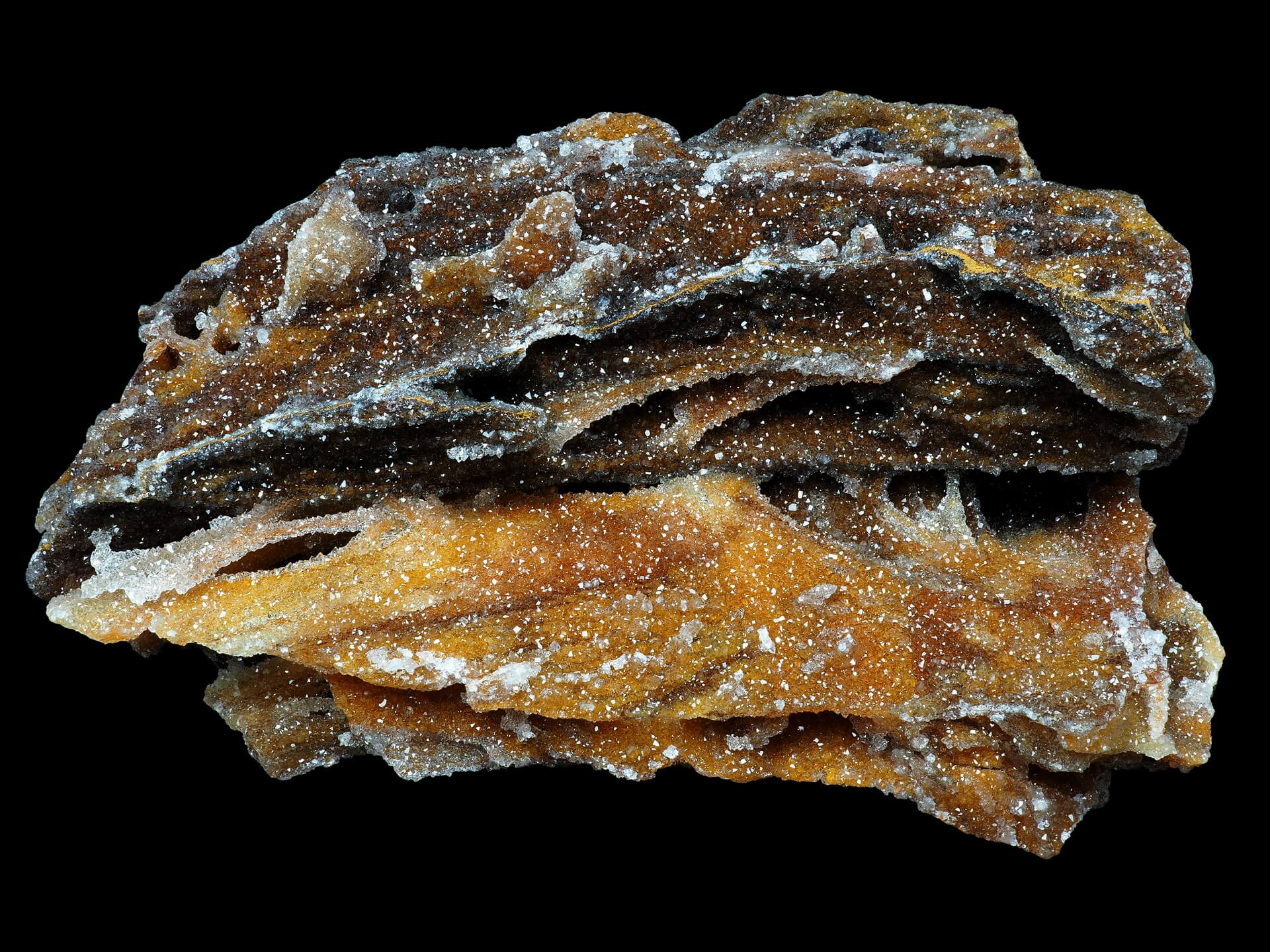

Minerals: Quartz (druse), Limonite.
– Specimen Size: 13 x 11 x 6 cm (appr.)
– Found: Mexico (San Luis Potosi)
Photo: Leo Jahaan

Minerals: Quartz, Limonite.
Photo: Leo Jahaan
Representational Fine Art Photography.
Menu:
Copyright © 2026 · Leo Jahaan
Privacy & Cookies · Impressum
Minerals: Quartz (druse), Limonite.
– Specimen Size: 13 x 11 x 6 cm (appr.)
– Found: Mexico (San Luis Potosi)
Photo: Leo Jahaan
Minerals: Quartz, Limonite.
Photo: Leo Jahaan

Minerals: Realgar, Selenite (clear Gypsum).
– Field of View: 3 cm (appr.)
– Found: Peru (Palomo Mine)
Photo: Leo Jahaan

Decription: Selenite ‘window’ allowing viewing of the Realgar needles within. On the upper surface, Realgar has altered to orange Orpiment.
– Field of View: 3.5 cm (appr.)
Photo: Leo Jahaan

Decription: More detailed view of the above Selenite ‘window’. Notice the unusual bed of micro Realgar crystals in the lower-right.
– Field of View: 2 cm (appr.)
Photo: Leo Jahaan

Description: One particular Realgar crystal rises prominently upwards inside it’s Selenite host.
– Field of View: 1.5 cm (appr.)
Photo: Leo Jahaan
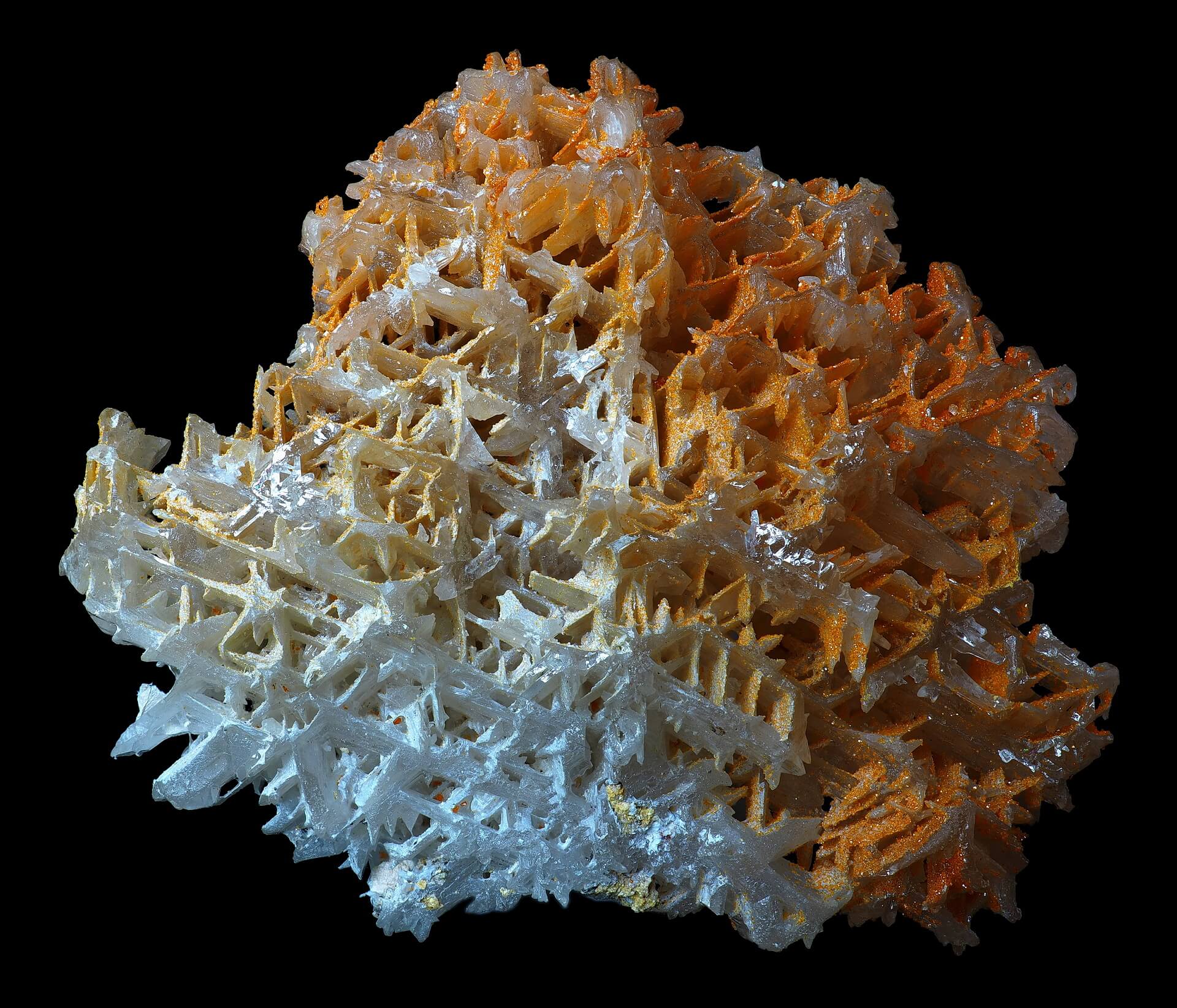
Minerals: Cerussite (reticulated), Wulfenite (orange coating).
– Specimen Size: 4 x 3 x 2 cm (appr.)
– Found: Iran (Nakhlak Mine, Isfahan)
Photo: Leo Jahaan
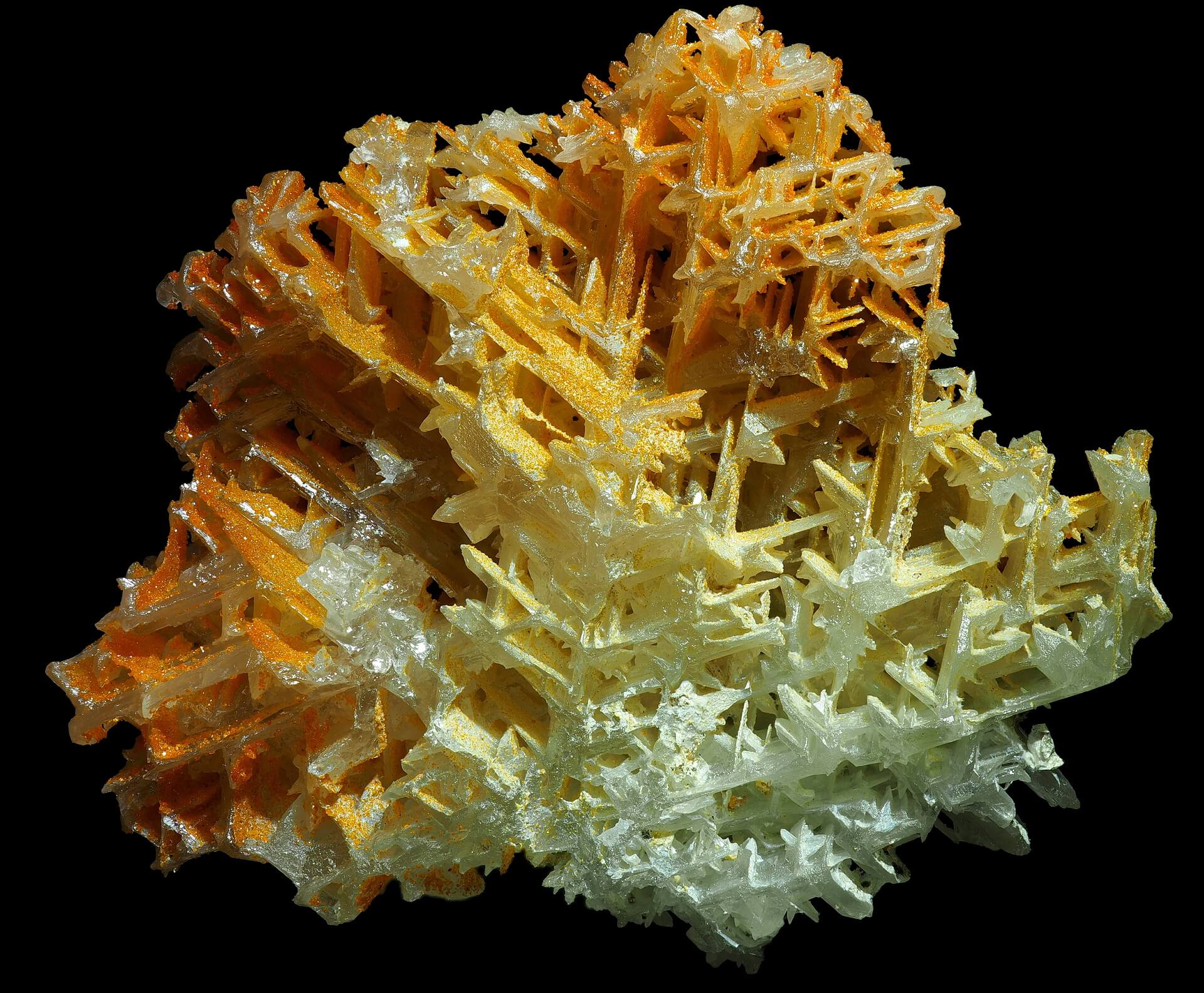
Description: Cerussite in it’s reticulated snowflake-like form, with Wulfenite forming only on the upper surface planes.
Photo: Leo Jahaan
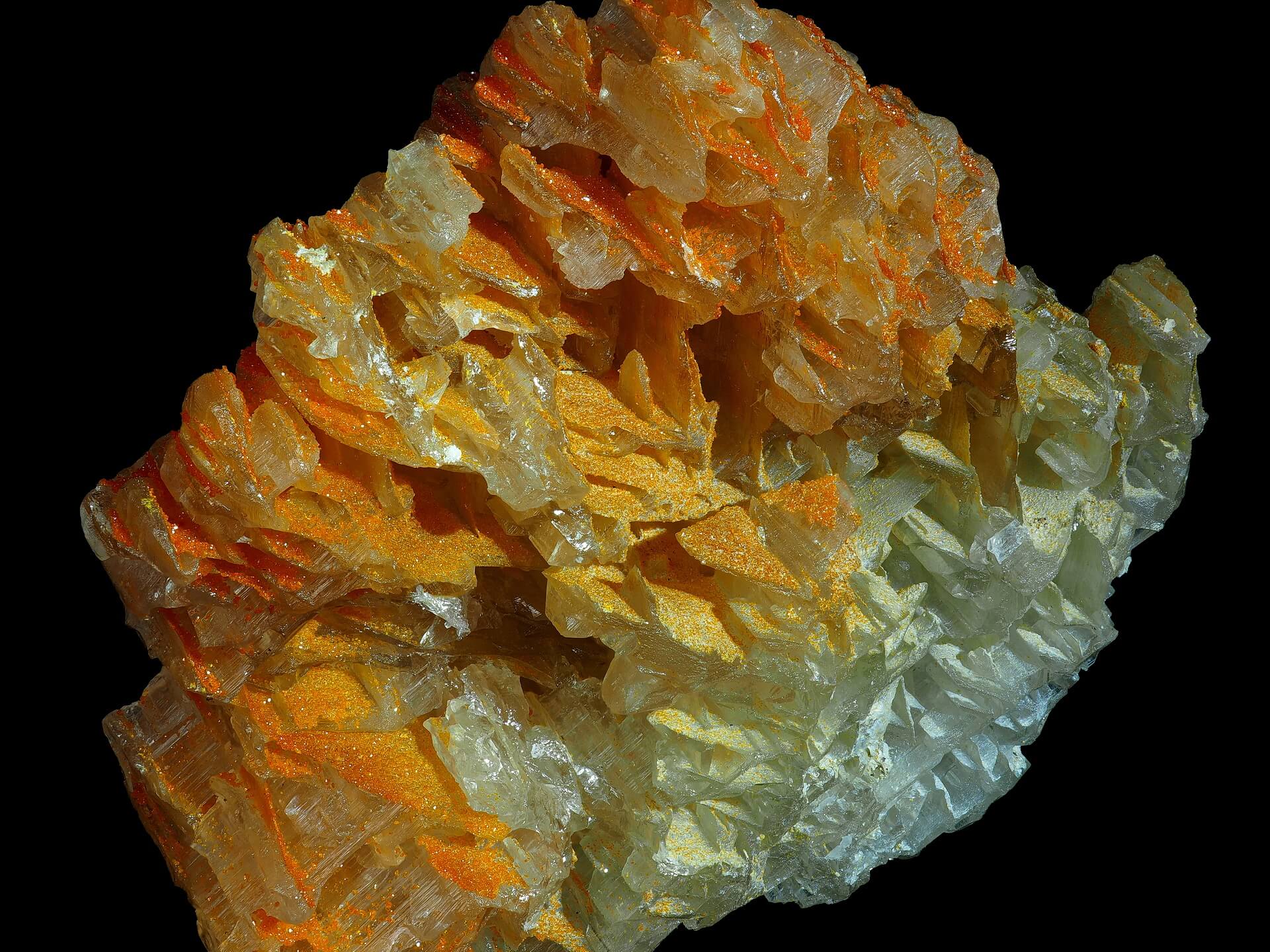
Minerals: Sparkling orange Wulfenite micro crystals on reticulated Cerussite.
Photo: Leo Jahaan

Mineral: Chalcedony (Agate), Limonite.
– Specimen Size: 7 x 6 x 6 cm (appr.)
– Found: Indonesia (Java)
Photo: Leo Jahaan
Notes: Specimens such as this are known as ‘Fossil Bamboo’ by the Javanese locals, however the material requires further research to ascertain exactly what it is and how it has formed. A likely theory is that these hollow tubes are translucent chalcedony casts, initially formed over organic matter. Volcanic ash has probably fallen into a marsh environment, dissolving into a mineral-rich suspension which changes the chemical composition of the wetland, resulting in the growth of cryptocrystalline quartz on the surface of tough silica-rich plant or grass stems. A likely plant candidate is Equisetum, commonly known as ‘horsetail’ or ‘puzzlegrass’, which can resemble bamboo in appearance. Following the slow decomposition of the inner organic material, iron-rich minerals such as limonite have formed on partial surfaces and in some cases formed bog iron ‘rods’ within the now-hollow tubes.